
Why Real-Time Eligibility Verification Should Happen Before the Patient Visit
A billing problem does not always begin when a claim is submitted.
Sometimes it starts much earlier—with inactive coverage, outdated insurance information, a missing referral, an unmet deductible, or another eligibility issue that could have been identified before the patient visit.
That is why real-time eligibility verification is an important front-end step in a podiatry practice’s revenue cycle.
When eligibility is checked consistently before the visit, staff have an opportunity to identify coverage and benefit issues earlier, update the patient record, clarify financial responsibility, and resolve problems before they travel downstream into billing.
The goal is not simply to “check insurance.” The goal is to create a repeatable workflow that gives the front desk and billing team cleaner, more current information to work from.
Why Eligibility Verification Matters
Eligibility verification helps a practice understand whether a patient’s coverage is active and what benefit information may affect the upcoming visit.
A strong eligibility process can help confirm active coverage, identify copays and deductibles, recognize benefit limitations, and surface referral or authorization requirements before services move further through the billing process.
This matters because incomplete or outdated information at the front desk can become a billing problem later.
If coverage has changed, a referral is required, or important insurance information is missing, discovering that issue after the claim is submitted creates additional work for the practice. Identifying it earlier gives the team an opportunity to address the problem while the patient information is still being prepared for the visit.
What Should Be Checked Before the Visit?
Eligibility verification should go beyond confirming that an insurance plan appears active.
The practice should have a consistent process for reviewing the information that may affect the patient’s visit and subsequent claim.
A practical pre-visit review may include the patient’s demographic and insurance information, active coverage, copay, deductible status, benefit limitations, referral requirements, authorization requirements, applicable service coverage, and coordination-of-benefits information when relevant.
The purpose is to identify discrepancies before they become downstream problems.
When something does not match the information already on file, the patient record can be updated and the issue can be addressed before billing begins.
Common Eligibility Problems That Can Be Caught Early
Several front-end issues can create unnecessary complications if they are not identified before the visit.
Inactive coverage may indicate that a policy has changed or lapsed.
A required referral may need to be addressed before certain services move forward.
A non-covered service may create unexpected patient responsibility if coverage is not reviewed in advance.
An unmet deductible can change what the patient may owe for services.
Coordination-of-benefits issues can occur when primary and secondary insurance information is incomplete or incorrect.
And sometimes the issue is simply missing or outdated information in the patient record.
These are not all the same problem, but they share something important: the earlier they are identified, the more opportunity the practice has to correct or clarify the information before it affects the claim.
A Practical Real-Time Eligibility Workflow
- Collect current patient and insurance information.
Make sure the practice has the information needed to perform the eligibility check and compare it with the existing patient record. - Verify eligibility before the visit.
Confirm that coverage is active and review the available benefit information associated with the upcoming care. - Review patient responsibility and benefit details.
Look for copays, deductible information, benefit limitations, and other coverage details that may affect the visit. - Check for referrals, authorizations, and coordination-of-benefits issues.
Identify requirements or discrepancies that may need attention before billing. - Resolve discrepancies and update the patient record.
Correct outdated or incomplete information rather than allowing known problems to move downstream. - Carry the verified information into billing and claim preparation.
The billing team should be working from the updated patient and insurance information established during the front-end process.
Front-Desk Consistency Makes the Workflow Work
Eligibility technology can provide information, but the process still depends on the people using it.
Front-desk staff need to understand what they are looking for and what to do when the eligibility response does not match the patient record.
That includes verifying insurance details, updating patient information, recognizing common eligibility issues, using the practice’s eligibility tools consistently, and following up when something requires clarification.
A reliable process also helps reduce variation between staff members.
Instead of one person checking coverage one way and another person checking it differently, the practice can establish a common workflow for what should be reviewed before the visit.
That consistency creates a cleaner handoff between the front desk and billing team.
Eligibility Verification and Claim Scrubbing Protect
Different Parts of the Workflow
Eligibility verification and claim scrubbing are closely related, but they address different checkpoints.
Eligibility verification is front-end protection.
It helps the practice confirm coverage, benefits, patient responsibility, and related requirements before the claim is prepared.
Claim scrubbing is pre-submission protection.
It provides another opportunity to identify claim-related problems before the claim is sent to the payer.
Used together, they create two important checkpoints in the revenue cycle: one before the visit moves through billing and another before the claim leaves the practice.
If you have not already explored it, our Resource Center article How to Catch Claim Problems Before Submission: A Claim Scrubbing Workflow for Podiatry Practices walks through that second checkpoint in more detail.
What a Strong Eligibility Process Can Improve
A consistent eligibility workflow can help the practice reduce preventable front-end problems, improve the quality of information handed to billing, and limit unnecessary rework caused by issues that could have been addressed earlier.
It can also help staff establish clearer expectations around patient responsibility before those questions reach the billing stage.
The broader benefit is a more organized revenue-cycle process.
Eligibility verification alone cannot prevent every billing problem, but it can help remove avoidable uncertainty from the front end of the workflow.
Turn Eligibility Verification Into a Repeatable Process
The most useful eligibility process is one your team can follow consistently.
That means defining when eligibility should be checked, what information staff should review, how discrepancies should be handled, and how updated information should move from the front desk into billing.
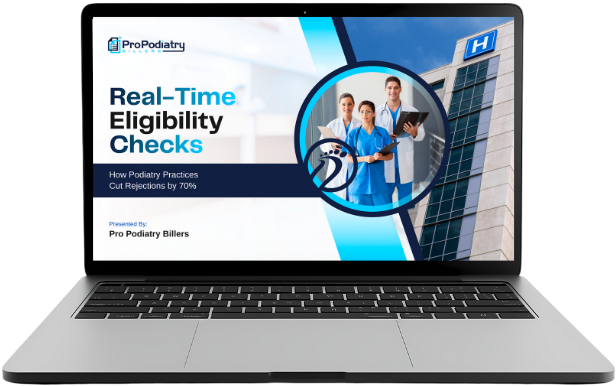
If your team needs a practical process to follow, explore the Pro Podiatry Billers Real-Time Eligibility Workflow for a step-by-step resource designed to support more consistent eligibility verification.
Because improving your revenue cycle does not have to happen all at once.
It happens by strengthening one process, one workflow, and one decision at a time—helping your practice Boost Your Revenue, One Step at a Time.
Workflow
Real-Time Eligibility Workflow
A practical workflow to help your team verify coverage, patient responsibility, referrals, authorizations, and other eligibility details before the patient visit.
Front-End Revenue Cycle
